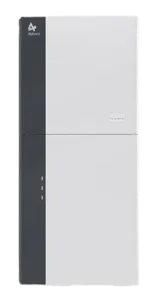
Anker Solix Solar Battery Storage — Complete Australian Buyer’s Guide
Page meta description: Complete guide to Anker Solix solar batteries in Australia 2025 — full specs for SOLIX X1 and SOLIX X1 Business series, installed pricing, government rebates, warranty details, pros and cons, and FAQs for Australian homeowners.
Why Anker Solix Batteries Are Worth Considering in Australia
Anker is one of the most recognised consumer electronics brands in the world known globally for portable chargers, cables, and audio products trusted by hundreds of millions of customers across more than 100 countries. In 2022, Anker launched Anker Solix as a dedicated energy division, bringing the same engineering precision, premium build quality, and customer-first approach that defined the Anker brand into the residential solar battery storage market. The SOLIX X1 Anker Solix’s flagship home energy storage system launched in Australia in 2024 and has quickly attracted attention from Australian homeowners and installers looking for a premium-quality battery at a competitive price point.
What makes Anker Solix genuinely different from most battery brands available in Australia is the combination of Anker’s world-class hardware engineering heritage with a modern, software-first approach to energy management. The SOLIX X1 is not simply a battery with a monitoring app, it is an intelligent energy management system that uses AI-driven algorithms to optimise charge and discharge cycles based on your household’s specific usage patterns, electricity tariff structure, weather forecasts, and grid price signals. For Australian homeowners on time-of-use tariffs where grid electricity is significantly more expensive during peak periods this intelligent optimisation can meaningfully improve the financial return of the battery investment beyond what a standard battery system achieves.
Anker Solix entered the Australian market with CEC-approved products and a growing network of accredited local installers. The SOLIX X1 is AS/NZS 5139 compliant and eligible for the federal Cheaper Home Batteries Program rebate that commenced 1 July 2025. Anker Solix provides Australian customers with dedicated local technical support and a warranty claims process managed through the Australian distribution network.
All Anker Solix batteries use LFP (Lithium Iron Phosphate) chemistry, the safest and most thermally stable lithium battery technology available, making them well suited to Australia’s extreme summer temperatures across QLD, WA, SA, and inland NSW.
Anker Solix battery series available in Australia:
| Series | Voltage type | Capacity range | Best for |
| SOLIX X1 | Modular, scalable | 5 – 20 kWh | Residential, single and three-phase |
| SOLIX X1 Business | Modular, scalable | 10 – 40 kWh | Large homes, small commercial |
Model 1 — Anker Solix X1: Intelligent Residential Energy Storage
What Is the Anker Solix X1?
The Anker Solix X1 is Anker’s flagship residential home energy storage system and the primary battery product available to Australian homeowners. It is a modular, scalable system available from 5 kWh up to 20 kWh in a single residential configuration. The SOLIX X1 is designed as a complete energy management system combining LFP battery storage with an AI-powered energy management platform, a built-in smart meter, and optional solar inverter integration into a single cohesive product.
Unlike most residential batteries that simply store and release energy on a fixed schedule, the SOLIX X1’s AI energy management engine continuously analyses your household’s consumption patterns, your solar generation forecast, your electricity tariff structure, and real-time grid price signals and automatically optimises every charge and discharge decision to maximise your financial savings. For Australian homeowners on time-of-use tariffs or feed-in arrangements, this intelligence can deliver meaningfully better financial outcomes than a conventional battery system operating on a fixed daily schedule.
The SOLIX X1 is compatible with a wide range of solar inverters through its AC-coupled architecture making it one of the few premium battery systems in Australia that can be added to an existing solar installation without requiring a new hybrid inverter. This retrofit flexibility is a significant differentiator in the Australian market, where millions of homes already have solar panels installed with inverters from various brands.
SOLIX X1 — Technical Specifications
| Specification | Details |
| Battery chemistry | LFP — Lithium Iron Phosphate (cobalt-free) |
| Available configurations | 5 kWh / 10 kWh / 15 kWh / 20 kWh |
| Usable capacity | 95% DoD — e.g. ~19 kWh from 20 kWh configuration |
| Depth of discharge | 95% |
| Round-trip efficiency | ≥97% |
| Voltage type | AC-coupled / DC-coupled (configuration dependent) |
| Continuous output power | 5 kW (single phase) / 7.5 kW (three phase) |
| Peak output power | Up to 10 kW |
| EPS backup output | Yes — automatic switchover |
| EPS switchover time | <20 milliseconds |
| IP rating | IP65 |
| Cooling method | Intelligent temperature-controlled cooling |
| Operating temperature | -10°C to +50°C |
| Mounting | Wall-mount (compact, all-in-one enclosure) |
| Communication interface | WiFi / Ethernet / RS485 / CAN Bus |
| Smart meter | Built-in — whole-home energy monitoring |
| AI energy management | Yes — proprietary Anker AI optimisation engine |
| Single-phase support | Yes |
| Three-phase support | Yes — with appropriate configuration |
| Self-discharge rate | <1% per month |
| Cycle life | 6,000+ cycles at 80% DoD |
| Capacity retention | ≥80% after 6,000 cycles or 10 years |
| Warranty | 10 years |
| Remote monitoring | Anker app (iOS and Android) + web portal |
| Certifications | AS/NZS 5139, IEC 62619, UN38.3, CE, RCM |
| CEC approved | Yes — eligible for Cheaper Home Batteries Program |
| Compatible inverters | AC-coupled — compatible with most major inverter brands |
SOLIX X1 — Key Features
AI-powered energy management — the SOLIX X1’s defining feature The most significant differentiator of the Anker Solix X1 is its proprietary AI energy management engine. Unlike standard battery systems that operate on a simple charge-during-day, discharge-in-evening schedule, the SOLIX X1’s AI continuously analyses multiple data streams your household’s historical and real-time consumption patterns, your solar generation forecast based on weather data, your electricity tariff structure including time-of-use pricing, and grid price signals where available and makes optimised charge and discharge decisions every few minutes throughout the day.
For Australian homeowners on time-of-use tariffs where electricity can cost 45–55 cents per kWh during peak periods (typically 3–9pm) versus 10–15 cents during off-peak, this intelligent optimisation ensures the battery is always charged at the cheapest available rate and discharged at the most expensive rate. Over a full year, this ongoing optimisation can add hundreds of dollars to annual savings compared to a conventional battery on a fixed schedule.
AC-coupled architecture — works with existing solar installations The SOLIX X1’s AC-coupled architecture is one of its most important practical advantages for the Australian market. AC coupling means the SOLIX X1 can be added to an existing solar installation regardless of what inverter brand is currently installed — without requiring a new hybrid inverter. This makes the SOLIX X1 accessible to the millions of Australian homes that already have solar panels with a Fronius, SMA, ABB, Enphase, SolarEdge, or other brand inverter, and who would otherwise need to replace their existing inverter to add battery storage. The ability to retrofit without inverter replacement can save Australian homeowners $2,000–$5,000 in additional system cost.
IP65 weatherproofing — better than most competitors The SOLIX X1 carries an IP65 rating — fully dust-tight and protected against water jets from any direction. This is one step above the IP55 found on most competing residential batteries from SolaX, GoodWe, and SAJ, making the SOLIX X1 more suitable for outdoor installation locations in Australian conditions. The IP65 rating provides added confidence for installations in coastal areas, regions with heavy seasonal rainfall, or dusty inland environments.
Built-in smart meter — whole-home energy visibility Unlike most batteries that require a separate smart meter or CT clamp installation for whole-home energy monitoring, the SOLIX X1 includes a built-in smart meter as standard. This smart meter monitors your complete household energy flows in real time solar generation, battery state, grid import and export, and individual circuit loads where configured providing a complete picture of your home’s energy profile without additional hardware cost.
Ultra-fast EPS backup — less than 20 millisecond switchover The SOLIX X1’s built-in EPS provides automatic whole-home backup during a grid outage with a switchover time of under 20 milliseconds — fast enough that most sensitive electronic devices do not register the interruption. This is among the fastest backup switchover times available for any residential battery in Australia and is particularly valuable for Australian households with home offices, medical equipment, or other sensitive electronics that cannot tolerate power interruptions.
Compact wall-mount design — minimal installation footprint The SOLIX X1’s all-in-one wall-mount enclosure integrates the battery, inverter components, smart meter, and energy management electronics into a single compact unit. This integration dramatically reduces the installation footprint compared to systems that require separate battery and inverter units, and delivers one of the tidiest residential energy storage installations available in the Australian market.
<1% monthly self-discharge rate The SOLIX X1’s self-discharge rate of less than 1% per month is among the lowest available for any residential LFP battery. This means a fully charged SOLIX X1 loses less than 1% of its stored energy per month when not in use a meaningful advantage for holiday homes, seasonal installations, or any property where the battery may not be cycled daily for extended periods.
Wide inverter compatibility via AC coupling The SOLIX X1 is compatible with solar installations using inverters from most major brands, including Fronius, SMA, Enphase, SolarEdge, ABB, GoodWe, SolaX, Fox-ESS, Growatt, and others. This broad compatibility makes the SOLIX X1 the most flexible retrofit battery option available to Australian homeowners with existing solar installations regardless of what inverter was installed with their original solar system.
Who Is the SOLIX X1 For?
The Anker Solix X1 is the right choice for Australian homeowners who:
- Already have a solar installation with an existing inverter and want to add battery storage without replacing the inverter
- Are on a time-of-use electricity tariff and want AI-powered optimisation to maximise financial savings
- Want a premium-quality battery with a clean, compact all-in-one wall-mount design
- Need fast automatic EPS backup with sub-20 millisecond switchover for sensitive electronics
- Want whole-home energy monitoring included as standard without additional hardware
- Value IP65 weatherproofing for outdoor or semi-outdoor installation in Australian conditions
- Are on single or three-phase power and want a single battery product that supports both
SOLIX X1 Pricing — Australia 2025
| Configuration | Approx. installed cost (incl. GST) | After federal rebate (~$370/kWh) |
| 5 kWh | ~$6,000–$8,000 | ~$4,250–$6,250 |
| 10 kWh | ~$10,000–$13,000 | ~$6,300–$9,300 |
| 15 kWh | ~$14,000–$18,000 | ~$8,350–$12,350 |
| 20 kWh | ~$18,000–$23,000 | ~$10,400–$15,400 |
Prices are indicative and vary by state, installer, site conditions, and whether AC coupling to an existing system or full new installation. Rebate amounts are approximate.
Model 2 — Anker Solix X1 Business: Large-Scale Residential and Commercial Storage
What Is the Anker Solix X1 Business?
The Anker Solix X1 Business is the commercial and large residential version of the SOLIX X1 platform. Designed for large homes with very high daily energy consumption, small businesses, farms, and light commercial applications, the SOLIX X1 Business scales from 10 kWh up to 40 kWh in a single installation — double the maximum capacity of the residential SOLIX X1.
Like the residential SOLIX X1, the X1 Business incorporates Anker’s AI energy management engine, built-in smart metering, AC-coupled architecture for broad inverter compatibility, and the same premium LFP chemistry and IP65 weatherproofing. The X1 Business adds higher continuous power output, three-phase support as standard, and a more robust enclosure design suited to commercial installation environments.
For large Australian households with daily energy consumption above 25 kWh, properties with EV charging infrastructure, farms with irrigation or refrigeration loads, or small businesses with significant daytime and evening energy demands, the SOLIX X1 Business provides a premium-quality, AI-optimised energy storage solution at a scale that most residential battery brands cannot match.
SOLIX X1 Business — Technical Specifications
| Specification | Details |
| Battery chemistry | LFP — Lithium Iron Phosphate (cobalt-free) |
| Available configurations | 10 kWh / 20 kWh / 30 kWh / 40 kWh |
| Usable capacity | 95% DoD — e.g. ~38 kWh from 40 kWh configuration |
| Depth of discharge | 95% |
| Round-trip efficiency | ≥97% |
| Voltage type | AC-coupled / DC-coupled (configuration dependent) |
| Continuous output power | Up to 15 kW (three-phase) |
| Peak output power | Up to 20 kW |
| EPS backup output | Yes — three-phase automatic switchover |
| EPS switchover time | <20 milliseconds |
| IP rating | IP65 |
| Cooling method | Intelligent temperature-controlled cooling |
| Operating temperature | -10°C to +50°C |
| Mounting | Floor-mounted or wall-mount (configuration dependent) |
| Communication interface | WiFi / Ethernet / RS485 / CAN Bus / 4G (optional) |
| Smart meter | Built-in — whole-facility energy monitoring |
| AI energy management | Yes — Anker AI optimisation engine |
| Three-phase support | Yes — standard |
| Self-discharge rate | <1% per month |
| Cycle life | 6,000+ cycles at 80% DoD |
| Capacity retention | ≥80% after 6,000 cycles or 10 years |
| Warranty | 10 years |
| Remote monitoring | Anker app and web portal with commercial dashboard |
| Certifications | AS/NZS 5139, IEC 62619, UN38.3, CE, RCM |
| CEC approved | Yes — eligible for Cheaper Home Batteries Program |
| Compatible inverters | AC-coupled — compatible with most major commercial inverter brands |
SOLIX X1 Business — Key Features
40 kWh maximum capacity — one of the largest residential storage options in Australia At 40 kWh maximum capacity, the SOLIX X1 Business delivers more storage than almost any other residential battery brand available in Australia. Only Growatt’s ALP LV series (also 40 kWh per control box) matches this capacity at the residential level. For large Australian households with daily consumption above 30 kWh, farms with significant energy loads, or small businesses wanting to eliminate grid dependence during operating hours, 40 kWh of storage provides a genuinely transformative level of energy independence.
Three-phase support as standard Unlike the residential SOLIX X1 where three-phase configuration requires specific setup, the X1 Business includes three-phase support as standard providing backup and storage management across all three phases of the property. This is essential for commercial and large residential applications where single-phase backup would leave major equipment and infrastructure on unprotected phases during a grid outage.
Up to 20 kW peak power output The SOLIX X1 Business’s peak power output of 20 kW is among the highest available for any battery storage system at the residential-commercial boundary in Australia. This high power capacity enables the system to support demanding commercial loads including industrial refrigeration, large HVAC systems, workshop machinery, and EV charging infrastructure without overload risk during high-demand periods or grid outages.
AI energy management at commercial scale The same AI energy management engine that powers the residential SOLIX X1 operates at commercial scale in the X1 Business continuously optimising charge and discharge decisions based on facility consumption patterns, tariff structures, demand charge management, and solar generation forecasts. For Australian small businesses on commercial electricity tariffs with demand charges, this AI optimisation can deliver significant reductions in peak demand penalties, often one of the largest components of a commercial electricity bill.
4G connectivity option for remote monitoring The SOLIX X1 Business supports optional 4G connectivity enabling remote monitoring and management even in locations without reliable WiFi or fixed broadband. This is particularly valuable for Australian farms, remote properties, and commercial sites where internet connectivity may be limited or unreliable.
Built-in commercial energy dashboard The SOLIX X1 Business includes a commercial-grade monitoring dashboard that provides facility managers and business owners with detailed energy analytics including demand tracking, cost analysis, solar self-consumption rates, grid independence metrics, and ROI reporting. This level of reporting detail is typically only available in purpose-built commercial energy management systems costing significantly more.
Who Is the SOLIX X1 Business For?
The Anker Solix X1 Business is the right choice for:
- Large Australian homes with daily energy consumption above 25 kWh wanting 20–40 kWh of battery storage
- Small businesses, offices, and retail sites wanting to reduce electricity costs and improve energy independence
- Australian farms with irrigation, refrigeration, or workshop loads that benefit from high-capacity battery backup
- Properties with EV charging infrastructure requiring high-power battery storage support
- Three-phase properties needing large-capacity storage with whole-facility backup capability
- Remote or rural properties where 4G monitoring connectivity is preferred over WiFi
SOLIX X1 Business Pricing — Australia 2025
| Configuration | Approx. installed cost (incl. GST) | After federal rebate (~$370/kWh) |
| 10 kWh | ~$12,000–$16,000 | ~$8,300–$12,300 |
| 20 kWh | ~$20,000–$27,000 | ~$12,600–$19,600 |
| 30 kWh | ~$28,000–$37,000 | ~$16,900–$25,900 |
| 40 kWh | ~$36,000–$47,000 | ~$21,200–$32,200 |
Prices are indicative. X1 Business pricing varies significantly by configuration, site complexity, and installer. Always obtain multiple quotes for large commercial-scale installations.
All Anker Solix Battery Models — Full Comparison Table
| Feature | SOLIX X1 5 kWh | SOLIX X1 10 kWh | SOLIX X1 20 kWh | X1 Business 20 kWh | X1 Business 40 kWh |
| Capacity (nominal) | 5 kWh | 10 kWh | 20 kWh | 20 kWh | 40 kWh |
| Usable capacity | ~4.75 kWh | ~9.5 kWh | ~19 kWh | ~19 kWh | ~38 kWh |
| Depth of discharge | 95% | 95% | 95% | 95% | 95% |
| Round-trip efficiency | ≥97% | ≥97% | ≥97% | ≥97% | ≥97% |
| Voltage type | AC/DC coupled | AC/DC coupled | AC/DC coupled | AC/DC coupled | AC/DC coupled |
| IP rating | IP65 | IP65 | IP65 | IP65 | IP65 |
| Three-phase support | Yes (configurable) | Yes (configurable) | Yes (configurable) | Yes (standard) | Yes (standard) |
| Continuous power | 5 kW | 5 kW | 7.5 kW | 10 kW | 15 kW |
| Peak power | 10 kW | 10 kW | 10 kW | 15 kW | 20 kW |
| EPS switchover | <20 ms | <20 ms | <20 ms | <20 ms | <20 ms |
| AI energy management | Yes | Yes | Yes | Yes | Yes |
| Built-in smart meter | Yes | Yes | Yes | Yes | Yes |
| AC-coupled | Yes | Yes | Yes | Yes | Yes |
| Inverter agnostic | Yes | Yes | Yes | Yes | Yes |
| Self-discharge | <1%/month | <1%/month | <1%/month | <1%/month | <1%/month |
| Expandable | Yes | Yes | Yes | Yes | Yes |
| Cycle life | 6,000+ | 6,000+ | 6,000+ | 6,000+ | 6,000+ |
| Warranty | 10 years | 10 years | 10 years | 10 years | 10 years |
| Best for | Small homes | Medium homes | Large homes | Large homes/business | Commercial/farm |
Which Anker Solix Battery Should I Choose?
Choose the SOLIX X1 5 kWh if you have a smaller home or apartment with modest overnight energy needs under 10 kWh and want to enter battery storage with a premium-quality AI-powered system at the most accessible price point. The 5 kWh SOLIX X1 is also ideal for households wanting to add storage to an existing solar installation without replacing their current inverter.
Choose the SOLIX X1 10 kWh if you have a medium-sized home with daily consumption of 15–25 kWh and want a complete AI-optimised energy management system that works with your existing solar inverter. The 10 kWh configuration is the most popular SOLIX X1 choice for standard Australian suburban households and delivers strong overnight coverage with meaningful financial savings on time-of-use tariffs.
Choose the SOLIX X1 15 kWh if you have a larger home, higher daily consumption, or want extended backup duration during grid outages. The 15 kWh configuration provides enough storage to cover the full overnight needs of most four-to-five bedroom Australian homes while still delivering competitive installed pricing after the federal rebate.
Choose the SOLIX X1 20 kWh if you have a large home with high daily consumption, an EV charger, or want maximum residential storage from the SOLIX X1 platform. The 20 kWh configuration delivers 19 kWh of usable storage enough to cover the overnight needs of the most energy-intensive Australian households.
Choose the SOLIX X1 Business 20–40 kWh if you have very large energy storage requirements that exceed what the residential SOLIX X1 can meet including large homes with daily consumption above 25 kWh, farms, small businesses, or commercial properties. The X1 Business adds three-phase standard support, higher peak power output, optional 4G connectivity, and a commercial monitoring dashboard.
Anker Solix may not be the right fit if you are on a very tight budget and want the lowest possible cost per kWh of installed storage. Anker Solix is a premium product and is priced accordingly — budget-focused buyers may find better value in Growatt ALP LV, Alpha-ESS, or Fox-ESS ECS which offer lower installed cost per kWh, albeit without the AI energy management, inverter-agnostic compatibility, and premium build quality of the SOLIX platform.
Australian Government Battery Rebate
All Anker Solix SOLIX X1 and X1 Business battery models are CEC approved and eligible for the federal Cheaper Home Batteries Program, which commenced 1 July 2025. The rebate provides approximately $320–$372 per usable kWh off the installed cost of eligible batteries applied directly to your invoice by your installer.
Rebate Examples for Anker Solix Systems
| System | Usable capacity | Approx. federal rebate | Installed cost after rebate |
| SOLIX X1 5 kWh | ~4.75 kWh | ~$1,760 | ~$4,240–$6,240 |
| SOLIX X1 10 kWh | ~9.5 kWh | ~$3,520 | ~$6,480–$9,480 |
| SOLIX X1 15 kWh | ~14.25 kWh | ~$5,270 | ~$8,730–$12,730 |
| SOLIX X1 20 kWh | ~19.0 kWh | ~$7,030 | ~$10,970–$15,970 |
| X1 Business 20 kWh | ~19.0 kWh | ~$7,030 | ~$12,970–$19,970 |
| X1 Business 30 kWh | ~28.5 kWh | ~$10,550 | ~$17,450–$26,450 |
| X1 Business 40 kWh | ~38.0 kWh | ~$14,060 | ~$21,940–$32,940 |
Rebate amounts are approximate final value depends on the STC price at time of installation. Rebate applies to the first 50 kWh of usable capacity.
Critical deadline — 1 May 2026: The federal rebate structure is expected to change significantly from 1 May 2026. The system must be physically installed and commissioned before this date to secure current rebate rates. For a 20 kWh+ SOLIX system, acting before 1 May 2026 could represent a difference of $5,000–$10,000 in rebate value.
State Rebates — Stack on Top of the Federal Rebate
- Victoria — Solar Homes Program battery rebate: up to $2,950 rebate plus interest-free loan
- South Australia — Home Battery Scheme (income-tested): up to $2,000 subsidy
- ACT — Sustainable Household Scheme: interest-free loans up to $15,000
- Queensland — Battery Booster Program (eligible regional areas): up to $3,000
- Western Australia — State battery rebate: $1,300–$3,800 in addition to federal rebate
- NSW — VPP incentives available alongside the federal rebate
Always check current availability on your state government energy website before signing a contract.
Anker Solix Battery Warranty
Both the SOLIX X1 and SOLIX X1 Business carry a 10-year product warranty from the date of installation, guaranteeing at least 80% of original usable capacity is retained throughout the warranty period.
| Battery series | Warranty duration | Capacity guarantee | Cycle life rated |
| SOLIX X1 (all configurations) | 10 years | ≥80% retained | 6,000+ cycles at 80% DoD |
| SOLIX X1 Business (all configurations) | 10 years | ≥80% retained | 6,000+ cycles at 80% DoD |
Understanding 6,000 cycles: At one full charge-discharge cycle per day, 6,000 cycles equals approximately 16.4 years of daily use well beyond the 10-year warranty period. The SOLIX X1’s AI energy management engine also optimises cycling patterns to minimise unnecessary deep cycling, which can further extend real-world battery life beyond the rated cycle count.
Key Warranty Conditions
- Installation must be completed by a licensed CEC-accredited electrician
- System must comply with AS/NZS 5139 and AS/NZS 3000
- Warranty applies to manufacturing defects and covered performance degradation not physical damage, flooding, fire, or improper installation
- Warranty claims handled through your installer or Anker Solix Australia
- Retain all installation documentation, commissioning records, and warranty registration confirmation at handover
- The SOLIX X1’s inverter-agnostic AC-coupled architecture means warranty is not dependent on a specific inverter brand a significant advantage over brands that void warranty if a non-approved inverter is used
Installation Requirements in Australia
All Anker Solix battery systems must be installed by a CEC-accredited electrician to maintain warranty coverage and qualify for government rebates.
Installation Process — Step by Step
Step 1 — Site assessment: Installer evaluates your existing solar system and inverter brand, daily electricity usage, switchboard condition, and preferred battery mounting location. For AC-coupled installations with existing solar, the assessment also confirms compatibility with the existing inverter.
Step 2 — System design and quote: Appropriate SOLIX X1 capacity, coupling configuration (AC or DC), and backup setup determined. Full written quote covering all supply, installation, and compliance costs provided.
Step 3 — Network application: DNSP network application submitted. Allow 10–30 business days for processing in most states.
Step 4 — Installation day: Wall mounting, AC or DC coupling connections, smart meter installation, Anker app WiFi setup, AI energy management configuration, and full system testing. A standard SOLIX X1 installation typically takes 4–6 hours. Larger X1 Business installations may take a full day.
Step 5 — AI optimisation setup: Unlike standard batteries, the SOLIX X1 requires initial AI configuration — entering your electricity tariff details, feed-in tariff rate, and preferred backup reserve level. The AI engine then begins learning your household’s consumption patterns over the first 2–4 weeks of operation, progressively improving optimisation as it accumulates usage data.
Step 6 — Compliance and certification: Electrical Safety Certificate and grid compliance documentation provided. System registered on Anker platform and warranty documentation issued.
Key Compliance Requirements
- AS/NZS 5139 — Safety requirements for battery energy storage systems
- AS/NZS 3000 — Australian Wiring Rules
- CEC Approved Products List — confirm SOLIX X1 model appears on the list before installation
- DNSP network application — required in most states for grid-connected systems
- Switchboard assessment — some older homes require upgrades adding $500–$2,000
Outdoor installation note: The Anker Solix SOLIX X1 is rated IP65 one step above most competing batteries — and is suitable for sheltered outdoor wall installation. Avoid direct sun exposure in hot Australian climate zones where sustained high ambient temperatures can affect battery performance and longevity.
Anker Solix Batteries — Pros and Cons
Advantages
- AI-powered energy management engine continuously optimises charge and discharge for maximum financial savings on time-of-use tariffs
- AC-coupled architecture compatible with existing solar installations from most major inverter brands without requiring inverter replacement
- IP65 weatherproofing better than most competing residential batteries rated at IP55
- Built-in smart meter whole-home energy monitoring included without additional hardware cost
- Ultra-fast EPS backup with sub-20 millisecond switchover among the fastest available in Australia
- All models use LFP cobalt-free chemistry safest lithium technology for Australian conditions
- 95% depth of discharge maximises usable energy per kWh of nominal capacity
- <1% monthly self-discharge rate among the lowest available for any residential LFP battery
- Scales from 5 kWh to 40 kWh (X1 Business) covers the full range of Australian residential and small commercial needs
- 10-year warranty with 80% capacity retention guarantee
- CEC approved fully eligible for the federal Cheaper Home Batteries Program rebate
- Anker’s global engineering expertise and quality reputation applied to residential energy storage
- Warranty not dependent on a specific inverter brand genuine inverter-agnostic flexibility
- Commercial-grade monitoring dashboard on X1 Business with demand tracking and ROI reporting
Limitations
- Premium pricing SOLIX X1 installed cost per kWh is higher than budget-focused competitors such as Growatt and Alpha-ESS
- Anker Solix is relatively new to the Australian battery market limited long-term local field data compared to more established brands
- Australian installer network is still growing fewer certified SOLIX installers available in regional and rural areas compared to major cities
- AI optimisation requires initial setup and a 2–4 week learning period before reaching full performance not instant-on like a standard battery
- SOLIX X1 operating temperature limited to 50°C the same as most competitors but does not match the 55°C rating of SolaX T-BAT models
- X1 Business pricing is at the premium end of the market budget-conscious large-scale buyers may find better cost-per-kWh value in Growatt ALP LV or Sungrow SBR
- Some regional and remote areas in Australia may have limited SOLIX installer availability
- Relatively new product line long-term reliability data still accumulating in Australian field conditions
FAQ
How does the Anker Solix AI energy management work?
The SOLIX X1's AI engine continuously analyses your household's historical and real-time consumption data, your solar generation forecast based on weather data, your electricity tariff structure including time-of-use rates, and grid price signals where available. It uses this data to make optimised charge and discharge decisions every few minutes for example, charging from the grid during cheap off-peak periods when solar is insufficient, or discharging to avoid expensive peak-period grid draws. The AI learns your household's patterns over the first 2–4 weeks and progressively improves its optimisation accuracy over time.
Does a SOLIX X1 work during a blackout?
Yes. The SOLIX X1 includes built-in EPS backup that automatically switches to battery power during a grid outage in under 20 milliseconds. Solar generation continues to charge the battery during the outage, extending backup duration. The backup is single-phase for the residential SOLIX X1 and three-phase standard for the SOLIX X1 Business. Always confirm backup configuration with your installer before signing a contract.
Is the Anker Solix SOLIX X1 eligible for Australian government rebates?
Yes. The SOLIX X1 and X1 Business are CEC approved and eligible for the federal Cheaper Home Batteries Program from 1 July 2025 providing approximately $320–$372 per usable kWh off your installed cost. A 10 kWh SOLIX X1 can attract over $3,500 in federal rebate. State rebates may also apply depending on your location. The rebate structure changes from 1 May 2026 installing before that date is strongly recommended.
How long will an Anker Solix battery last?
Anker Solix batteries are rated for 6,000+ cycles at 80% DoD approximately 16 years of daily cycling. The 10-year warranty guarantees at least 80% of original capacity is retained. The AI energy management engine also optimises cycling patterns to minimise unnecessary deep cycling, which can further extend real-world battery life beyond the rated cycle count. LFP chemistry degrades slowly and predictably batteries typically retain 70–75% capacity even after warranty expiry.
How does the SOLIX X1 compare to Tesla Powerwall 3?
Both are premium residential batteries with AI energy management and clean all-in-one designs. The SOLIX X1 has a key advantage in inverter-agnostic AC-coupled compatibility: it works with existing solar installations without replacing the inverter, whereas the Tesla Powerwall 3 requires a Tesla inverter or specific AC coupling configuration. The SOLIX X1 also offers more flexible capacity options (5–20 kWh versus Powerwall 3's fixed 13.5 kWh). Tesla Powerwall 3 has a stronger brand reputation and larger Australian installer network. Pricing is broadly similar between the two products.
How do I get the best price on an Anker Solix battery in Australia?
Get at least 3 quotes from CEC-accredited installers with Anker Solix experience in your local area. Prices can vary by $2,000–$4,000 for the same system between different installers. Always confirm the federal Cheaper Home Batteries Program rebate is applied as a direct invoice discount. Check whether state rebates apply in your location. Using a solar quote comparison service lets you receive multiple competitive quotes from verified local installers quickly and at no cost.