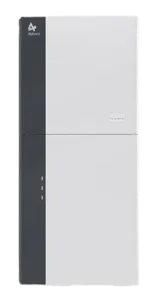
Why SolarEdge Batteries Are Worth Considering in Australia
SolarEdge Technologies is one of the most recognised and respected solar technology companies in the world. Founded in 2006 in Israel and listed on NASDAQ, SolarEdge has installed more than 3.3 million systems across more than 133 countries making it one of the largest solar inverter manufacturers globally by installed capacity. In Australia, SolarEdge has been supplying its DC-optimised inverter systems since 2012 and has built one of the strongest brand reputations of any solar inverter company in the country, particularly among premium system buyers who prioritise performance monitoring, module-level optimisation, and long-term reliability.
SolarEdge entered the residential battery storage market with the SolarEdge Home Battery, a battery specifically engineered to integrate with the SolarEdge Home Hub inverter and the SolarEdge ecosystem of DC power optimisers. For Australian homeowners who already have a SolarEdge solar system installed a very large segment given SolarEdge’s decade-long presence in Australia the SolarEdge Home Battery is the most seamless and technically optimised battery upgrade available, providing deeper system integration, better monitoring, and a single-brand warranty that simplifies ownership.
SolarEdge’s approach to battery storage differs meaningfully from most competing brands. Rather than selling a standalone battery that connects to a generic hybrid inverter, SolarEdge integrates the battery directly into the SolarEdge Home Hub inverter system creating a unified energy management platform where the inverter, battery, solar panels, and optional EV charger are all managed by a single intelligent controller with module-level visibility of every component. This deep integration delivers a level of system intelligence, monitoring detail, and energy optimisation that most separate battery-inverter combinations cannot match.
All SolarEdge Home Batteries use LFP (Lithium Iron Phosphate) chemistry, the safest and most thermally stable lithium battery technology available, well suited to Australia’s extreme summer temperatures. SolarEdge batteries are Clean Energy Council (CEC) approved and AS/NZS 5139 compliant, making them eligible for the federal Cheaper Home Batteries Program rebate that commenced 1 July 2025.
SolarEdge has a strong Australian presence with a dedicated local team, national distributor network, and established warranty and technical support infrastructure covering all major Australian states and territories.
SolarEdge Home Battery series available in Australia:
| Series | Voltage type | Capacity | Best for |
| Home Battery 48V | Low-voltage (48V) | 9.7 kWh | Single-phase, standard residential |
| Home Battery HV | High-voltage | 10 kWh | Single and three-phase, larger homes |
Model 1 — SolarEdge Home Battery 48V: Standard Residential Battery
What Is the SolarEdge Home Battery 48V?
The SolarEdge Home Battery 48V is the brand’s standard residential battery, designed for integration with the SolarEdge Home Hub single-phase hybrid inverter. Available in a single fixed capacity of 9.7 kWh, the Home Battery 48V is a wall-mounted LFP battery that connects directly to the SolarEdge Home Hub forming a complete, tightly integrated solar-plus-storage system with module-level monitoring of every solar panel, the battery, and overall household energy flows through the SolarEdge monitoring platform.
The Home Battery 48V is best suited to small to medium Australian households on single-phase power with an existing SolarEdge solar system, or those installing a new SolarEdge system from scratch. Its 9.7 kWh capacity delivers strong overnight coverage for most standard Australian suburban households, and up to three batteries can be connected to a single Home Hub inverter providing a maximum of 29.1 kWh for households with higher storage requirements.
Home Battery 48V — Technical Specifications
| Specification | Details |
| Battery chemistry | LFP — Lithium Iron Phosphate (cobalt-free) |
| Nominal capacity | 9.7 kWh |
| Usable capacity | ~9.22 kWh (95% DoD) |
| Depth of discharge | 95% |
| Round-trip efficiency | ≥94.5% |
| Nominal voltage | 48V (low-voltage) |
| Continuous charge power | 5 kW |
| Continuous discharge power | 5 kW |
| Peak discharge power | 7 kW (for 10 seconds) |
| IP rating | IP55 |
| Cooling method | Natural convection (passive, fan-free) |
| Operating temperature | 0°C to +50°C |
| Storage temperature | -10°C to +60°C |
| Dimensions | 540 × 450 × 220 mm (approx.) |
| Weight | ~83 kg |
| Mounting | Wall-mount |
| Communication interface | SolarEdge proprietary communication bus |
| Self-discharge rate | <1% per month |
| Maximum batteries per inverter | 3 (up to 29.1 kWh total) |
| Cycle life | 6,000+ cycles at 80% DoD |
| Capacity retention | ≥70% after 10 years |
| Warranty | 10 years |
| Remote monitoring | SolarEdge monitoring platform (mySolarEdge app) |
| Certifications | AS/NZS 5139, IEC 62619, UN38.3, CE, RCM |
| CEC approved | Yes — eligible for Cheaper Home Batteries Program |
| Compatible inverters | SolarEdge Home Hub single-phase hybrid inverter |
Home Battery 48V — Key Features
Deep SolarEdge ecosystem integration — the defining advantage The SolarEdge Home Battery 48V is not simply a battery connected to an inverter it is a fully integrated component of the SolarEdge Home energy management ecosystem. When paired with the SolarEdge Home Hub inverter and DC power optimisers, the system provides module-level monitoring of every individual solar panel, the battery state of charge, and complete household energy flows through a single unified platform. This level of integration and visibility is not available with any battery-inverter combination from competing brands.
For Australian homeowners who already have a SolarEdge system particularly those with DC power optimisers on their roof the Home Battery 48V is the natural battery upgrade that leverages the full capability of the existing system without requiring any changes to the solar array or monitoring infrastructure.
Up to 29.1 kWh in a single system — three batteries per inverter While the Home Battery 48V is available in a single 9.7 kWh unit, up to three batteries can be connected to a single SolarEdge Home Hub inverter providing a total system capacity of 29.1 kWh. This scalability means the Home Battery 48V can meet the needs of households with modest storage requirements (a single 9.7 kWh unit) right through to large homes needing substantial overnight coverage (three units at 29.1 kWh) all within the same integrated SolarEdge ecosystem.
95% depth of discharge — 9.22 kWh usable from 9.7 kWh The Home Battery 48V’s 95% DoD delivers 9.22 kWh of usable storage from a 9.7 kWh nominal unit near-complete utilisation of the battery’s rated capacity. This high DoD maximises the value of every stored kilowatt-hour and ensures Australian homeowners get the most out of their battery investment on every charge cycle.
LFP chemistry — cobalt-free and thermally safe Like all SolarEdge batteries, the Home Battery 48V uses lithium iron phosphate a cobalt-free chemistry with very low thermal runaway risk and consistent performance across Australia’s wide temperature range. LFP also degrades more slowly than NMC chemistries, maintaining higher capacity retention across thousands of cycles.
EPS backup — automatic whole-home backup during grid outages When configured with EPS backup enabled on the SolarEdge Home Hub, the Home Battery 48V provides automatic whole-home backup during a grid outage switching without manual intervention and continuing to charge from solar generation during the outage. This provides Australian households with meaningful resilience against the grid outages that occur increasingly frequently due to extreme weather events.
SolarEdge monitoring platform — industry-leading visibility The SolarEdge monitoring platform is widely regarded by Australian installers as one of the most detailed and reliable solar monitoring systems available. The mySolarEdge app and web portal provide module-level solar panel performance data, battery state of charge, grid import and export, and complete household energy flow visualisation, a level of monitoring detail that most competing battery brands cannot match. Remote diagnostics and firmware updates are supported.
<1% monthly self-discharge Like the Anker Solix X1, the SolarEdge Home Battery 48V achieves a self-discharge rate of less than 1% per month among the lowest available for any residential LFP battery. This is particularly valuable for Australian holiday homes, seasonal properties, or households that travel regularly and may not cycle the battery daily for extended periods.
Who Is the Home Battery 48V For?
The SolarEdge Home Battery 48V is the right choice for Australian homeowners who:
- Already have a SolarEdge solar system and want the most seamless, deeply integrated battery upgrade
- Are installing a complete new SolarEdge system and want module-level monitoring with integrated battery storage
- Have a single-phase connection with daily energy consumption of 10–25 kWh
- Want the detailed module-level monitoring capability that only the SolarEdge ecosystem provides
- May want to expand to 29.1 kWh total storage by adding a second or third battery in the future
Home Battery 48V Pricing — Australia 2025
| Configuration | Approx. installed cost (incl. GST) | After federal rebate (~$370/kWh) |
| 9.7 kWh (1 battery) | ~$9,000–$12,000 | ~$5,590–$8,590 |
| 19.4 kWh (2 batteries) | ~$16,000–$21,000 | ~$8,780–$13,780 |
| 29.1 kWh (3 batteries) | ~$22,000–$29,000 | ~$11,220–$18,220 |
Battery only does not include SolarEdge Home Hub inverter. Full SolarEdge system with panels, optimisers, inverter, and one battery typically ranges from $18,000–$32,000 depending on system size. Prices are indicative and vary by state, installer, and site conditions.
Model 2 — SolarEdge Home Battery HV: High-Voltage Battery
What Is the SolarEdge Home Battery HV?
The SolarEdge Home Battery HV is the high-voltage version of the SolarEdge Home Battery, designed for use with SolarEdge’s HV-capable Home Hub inverter on both single and three-phase properties. Available in a fixed capacity of 10 kWh, the Home Battery HV operates at higher voltage than the 48V model delivering improved round-trip efficiency under high-load conditions and compatibility with three-phase inverter configurations.
The Home Battery HV is best suited to medium to large Australian homes with three-phase power connections, or single-phase homes where high-voltage architecture is preferred for performance or future-proofing. Like the 48V model, up to three HV batteries can be connected to a single SolarEdge Home Hub HV inverter providing a maximum of 30 kWh for high-consumption households.
Home Battery HV — Technical Specifications
| Specification | Details |
| Battery chemistry | LFP — Lithium Iron Phosphate (cobalt-free) |
| Nominal capacity | 10 kWh |
| Usable capacity | ~9.5 kWh (95% DoD) |
| Depth of discharge | 95% |
| Round-trip efficiency | ≥96% |
| Voltage type | High-voltage — 100–120V DC |
| Continuous charge power | 5 kW |
| Continuous discharge power | 5 kW |
| Peak discharge power | 7.5 kW |
| IP rating | IP55 |
| Cooling method | Natural convection (passive, fan-free) |
| Operating temperature | 0°C to +50°C |
| Storage temperature | -10°C to +60°C |
| Weight | ~85 kg |
| Mounting | Wall-mount |
| Communication | SolarEdge proprietary communication bus |
| Self-discharge rate | <1% per month |
| Maximum batteries per inverter | 3 (up to 30 kWh total) |
| Three-phase compatibility | Yes — with SolarEdge Home Hub HV three-phase inverter |
| Cycle life | 6,000+ cycles at 80% DoD |
| Capacity retention | ≥70% after 10 years |
| Warranty | 10 years |
| Remote monitoring | SolarEdge monitoring platform (mySolarEdge app) |
| CEC approved | Yes — eligible for federal rebate |
| Compatible inverters | SolarEdge Home Hub HV single and three-phase inverters |
Home Battery HV — Key Features
High-voltage architecture for three-phase households The Home Battery HV’s high-voltage design makes it compatible with SolarEdge’s HV-capable Home Hub three-phase inverter — essential for Australian three-phase properties that want whole-property storage integration and backup capability. High-voltage batteries deliver better round-trip efficiency at high power outputs than equivalent low-voltage systems, making the Home Battery HV better suited to large homes with energy-intensive three-phase appliances.
Improved round-trip efficiency — ≥96% versus ≥94.5% for 48V model The Home Battery HV achieves ≥96% round-trip efficiency — meaningfully better than the 48V model’s ≥94.5%. This efficiency improvement is a direct result of the high-voltage architecture, which reduces resistive losses at high current levels. For Australian households cycling the battery daily, a 1.5% improvement in round-trip efficiency represents approximately $50–$80 in additional annual savings at typical Australian electricity rates.
Peak discharge power up to 7.5 kW The Home Battery HV’s peak discharge of 7.5 kW handles high instantaneous loads — including the startup surge of large air conditioning compressors, pool pumps, or workshop machinery — without overload risk during a blackout. This is 0.5 kW higher than the 48V model’s peak output and particularly valuable for three-phase Australian homes with high-draw appliances.
Up to 30 kWh total with three batteries Like the 48V model, up to three Home Battery HV units can be connected to a single SolarEdge Home Hub HV inverter — providing a maximum of 30 kWh (28.5 kWh usable) for large Australian homes or those wanting extended backup duration. This multi-battery scalability gives the SolarEdge HV system one of the most straightforward expansion paths available in the premium battery segment.
Same SolarEdge ecosystem integration and monitoring The Home Battery HV provides the same deep SolarEdge ecosystem integration and module-level monitoring capability as the 48V model — unified energy management, mySolarEdge app visibility, and remote diagnostics all included as standard within the same SolarEdge platform.
Three-phase EPS backup across all phases When paired with a SolarEdge Home Hub HV three-phase inverter with EPS configured, the Home Battery HV provides automatic backup across all three phases of the property during a grid outage protecting all household appliances and circuits regardless of which phase they are connected to.
Who Is the Home Battery HV For?
The SolarEdge Home Battery HV is the right choice for Australian homeowners who:
- Have three-phase power and want SolarEdge ecosystem integration with three-phase backup capability
- Have a larger home with daily energy consumption above 20 kWh
- Are pairing the battery with a SolarEdge Home Hub HV three-phase inverter
- Want the improved round-trip efficiency of a high-voltage architecture
- May want to expand to 30 kWh total by adding second or third HV batteries
Home Battery HV Pricing — Australia 2025
| Configuration | Approx. installed cost (incl. GST) | After federal rebate (~$370/kWh) |
| 10 kWh (1 battery) | ~$10,000–$13,500 | ~$6,490–$9,990 |
| 20 kWh (2 batteries) | ~$18,000–$24,000 | ~$10,580–$16,580 |
| 30 kWh (3 batteries) | ~$25,000–$34,000 | ~$13,830–$22,830 |
All SolarEdge Battery Models — Full Comparison Table
| Feature | Home Battery 48V (1 unit) | Home Battery 48V (3 units) | Home Battery HV (1 unit) | Home Battery HV (3 units) |
| Capacity (nominal) | 9.7 kWh | 29.1 kWh | 10 kWh | 30 kWh |
| Usable capacity | ~9.22 kWh | ~27.66 kWh | ~9.5 kWh | ~28.5 kWh |
| Depth of discharge | 95% | 95% | 95% | 95% |
| Round-trip efficiency | ≥94.5% | ≥94.5% | ≥96% | ≥96% |
| Voltage type | Low (48V) | Low (48V) | High (100–120V) | High (100–120V) |
| IP rating | IP55 | IP55 | IP55 | IP55 |
| Three-phase support | No | No | Yes | Yes |
| Continuous power | 5 kW | 5 kW | 5 kW | 5 kW |
| Peak power | 7 kW | 7 kW | 7.5 kW | 7.5 kW |
| EPS backup | Yes | Yes | Yes | Yes |
| Module-level monitoring | Yes | Yes | Yes | Yes |
| Expandable | Yes (up to 3) | — | Yes (up to 3) | — |
| Self-discharge | <1%/month | <1%/month | <1%/month | <1%/month |
| Cycle life | 6,000+ | 6,000+ | 6,000+ | 6,000+ |
| Warranty | 10 years | 10 years | 10 years | 10 years |
| Capacity retention | ≥70% after 10 yrs | ≥70% after 10 yrs | ≥70% after 10 yrs | ≥70% after 10 yrs |
| Avg. installed cost | ~$9,000–$12,000 | ~$22,000–$29,000 | ~$10,000–$13,500 | ~$25,000–$34,000 |
| Best for | Single-phase, existing SolarEdge system | Single-phase, high storage | Three-phase, SolarEdge HV system | Three-phase, high storage |
Which SolarEdge Battery Should I Choose?
Choose the Home Battery 48V if you already have a SolarEdge solar system with a single-phase Home Hub inverter and want the most seamless battery upgrade. The 9.7 kWh unit delivers strong overnight coverage for most Australian suburban households, and you can always add a second or third unit later if your storage needs grow. The 48V model is also the right choice if you are installing a complete new SolarEdge single-phase system and want module-level monitoring with integrated battery storage from day one.
Choose the Home Battery HV if you have three-phase power at your property and are pairing the battery with a SolarEdge Home Hub HV three-phase inverter. The HV model’s better round-trip efficiency (≥96% versus ≥94.5%), higher peak power (7.5 kW versus 7 kW), and three-phase backup capability make it the more capable and future-proof choice for larger Australian homes with three-phase connections. It is also the better choice for any single-phase installation where the improved efficiency of the high-voltage architecture is preferred.
Choose multiple batteries if your household has high daily energy consumption above 15 kWh, you want extended backup duration during grid outages, or you are planning for future energy growth including EV charging or additional household members. Both the 48V and HV models can be combined in sets of up to three reaching 29.1 kWh and 30 kWh respectively.
SolarEdge may not be the right fit if you do not have an existing SolarEdge system and are comparing batteries across brands on a cost-per-kWh basis. SolarEdge Home Batteries are priced at the premium end of the Australian market and are specifically optimised for the SolarEdge ecosystem. For households without an existing SolarEdge system who are comparing options purely on value, Growatt ALP LV, Fox-ESS ECS, or Sungrow SBR offer significantly lower cost per kWh of installed storage, albeit without SolarEdge’s module-level monitoring and ecosystem integration.
Australian Government Battery Rebate — How It Applies to SolarEdge
Both SolarEdge Home Battery models are CEC approved and eligible for the federal Cheaper Home Batteries Program, which commenced 1 July 2025. The rebate provides approximately $320–$372 per usable kWh off the installed cost of eligible batteries applied directly to your invoice by your installer.
Rebate Examples for SolarEdge Systems
| System | Usable capacity | Approx. federal rebate | Installed cost after rebate |
| Home Battery 48V (9.7 kWh) | ~9.22 kWh | ~$3,410 | ~$5,590–$8,590 |
| Home Battery 48V × 2 (19.4 kWh) | ~18.44 kWh | ~$6,820 | ~$9,180–$14,180 |
| Home Battery 48V × 3 (29.1 kWh) | ~27.66 kWh | ~$10,230 | ~$11,770–$18,770 |
| Home Battery HV (10 kWh) | ~9.5 kWh | ~$3,520 | ~$6,480–$9,980 |
| Home Battery HV × 2 (20 kWh) | ~19.0 kWh | ~$7,030 | ~$10,970–$16,970 |
| Home Battery HV × 3 (30 kWh) | ~28.5 kWh | ~$10,550 | ~$14,450–$23,450 |
Rebate amounts are approximate — final value depends on STC price at time of installation.
Critical deadline — 1 May 2026: The federal rebate structure is expected to change significantly from 1 May 2026. The system must be physically installed and commissioned before this date to secure current rebate rates. For a 3-battery SolarEdge system, acting before 1 May 2026 could represent a difference of $5,000–$10,000 in rebate value.
State Rebates — Stack on Top of the Federal Rebate
- Victoria — Solar Homes Program battery rebate: up to $2,950 rebate plus interest-free loan
- South Australia — Home Battery Scheme (income-tested): up to $2,000 subsidy
- ACT — Sustainable Household Scheme: interest-free loans up to $15,000
- Queensland — Battery Booster Program (eligible regional areas): up to $3,000
- Western Australia — State battery rebate: $1,300–$3,800 in addition to federal rebate
- NSW — VPP incentives available alongside the federal rebate
Always check current availability on your state government energy website before signing a contract.
SolarEdge Battery Warranty — Full Explanation
Both SolarEdge Home Battery models carry a 10-year product warranty from the date of installation.
| Battery model | Warranty duration | Capacity guarantee | Cycle life rated |
| Home Battery 48V | 10 years | ≥70% retained after 10 years | 6,000+ cycles at 80% DoD |
| Home Battery HV | 10 years | ≥70% retained after 10 years | 6,000+ cycles at 80% DoD |
Important — capacity retention note: SolarEdge’s warranty guarantees ≥70% capacity retention after 10 years slightly lower than the ≥80% offered by most competing battery brands. Australian homeowners should factor this into their comparison when evaluating SolarEdge against competing batteries that guarantee 80% retention over the same period.
Key Warranty Conditions
- Battery must be installed and operated with a compatible SolarEdge Home Hub inverter use with non-SolarEdge inverters voids the warranty
- Installation must be completed by a licensed CEC-accredited electrician with SolarEdge product training
- System must comply with AS/NZS 5139 and AS/NZS 3000
- Warranty applies to manufacturing defects and covered performance degradation not physical damage, flooding, fire, or improper installation
- Warranty claims handled through your installer or SolarEdge Australia
- Retain all installation documentation, commissioning records, and warranty registration at handover
Installation Requirements in Australia
All SolarEdge battery systems must be installed by a CEC-accredited electrician with SolarEdge-specific product training to maintain warranty coverage and qualify for government rebates.
Installation Process — Step by Step
Step 1 — Site assessment: Installer evaluates your existing or planned SolarEdge system, daily usage, switchboard condition, and preferred battery mounting location. For existing SolarEdge system upgrades, the installer confirms Home Hub inverter compatibility with the battery model selected.
Step 2 — System design and quote: Appropriate Home Battery model, number of units, and EPS backup configuration determined. Full written quote provided covering all costs.
Step 3 — Network application: DNSP network application submitted. Allow 10–30 business days in most states.
Step 4 — Installation day: Wall mounting, SolarEdge proprietary bus connection, EPS configuration, mySolarEdge app setup, and full system commissioning. A single Home Battery installation typically takes 3–5 hours. Multi-battery installations may take a full day.
Step 5 — Compliance and certification: Electrical Safety Certificate and grid compliance documentation provided. System registered on SolarEdge monitoring platform and warranty documentation issued.
Key Compliance Requirements
- AS/NZS 5139 — Safety requirements for battery energy storage systems
- AS/NZS 3000 — Australian Wiring Rules
- CEC Approved Products List — confirm SolarEdge Home Battery model and Home Hub inverter appear on the list
- DNSP network application — required in most states
- SolarEdge installer training — SolarEdge requires installers to complete brand-specific training for battery installations
- Switchboard assessment — older homes may require upgrades adding $500–$2,000
Important — operating temperature note: The SolarEdge Home Battery has a minimum operating temperature of 0°C higher than most competing batteries rated to -10°C. For Australian homeowners in alpine areas of Victoria, NSW, or Tasmania where overnight temperatures regularly fall below zero in winter, confirm with your installer that the installation location maintains temperatures above 0°C throughout the year.
SolarEdge Batteries — Pros and Cons
Advantages
- Deepest ecosystem integration of any battery in the Australian market — module-level solar panel monitoring, battery, and home energy management in a single unified platform
- Most seamless upgrade path for existing SolarEdge solar system owners — no inverter replacement required
- Both LV and HV models available — covering single and three-phase Australian households
- All models use LFP cobalt-free chemistry — safest lithium technology for Australian conditions
- 95% depth of discharge — maximises usable energy per kWh of nominal capacity
- <1% monthly self-discharge rate — among the lowest available for any residential battery
- Up to 3 batteries per inverter — scalable to 29.1 kWh (48V) or 30 kWh (HV) without additional hardware
- Home Battery HV achieves ≥96% round-trip efficiency — meaningfully better than 48V model
- 10-year warranty with industry-leading SolarEdge after-sales support infrastructure in Australia
- CEC approved — fully eligible for the federal Cheaper Home Batteries Program rebate
- mySolarEdge monitoring platform provides more detailed system visibility than most competing platforms
- Strong and well-established Australian brand presence — trusted by homeowners and installers for over a decade
- EPS backup included — automatic whole-home backup during grid outages
Limitations
- Strictly closed ecosystem — Home Batteries only work with SolarEdge Home Hub inverters and cannot be used with any other brand
- Warranty capacity retention guarantee of ≥70% is lower than the ≥80% offered by most competing brands including Growatt, Fox-ESS, GoodWe, and SolaX
- Home Battery 48V round-trip efficiency of ≥94.5% is lower than most competing batteries in the same price bracket
- Minimum operating temperature of 0°C — not suitable for alpine installations where temperatures regularly fall below zero
- Premium pricing — SolarEdge Home Battery is among the most expensive per kWh of any residential battery in Australia
- Fixed capacity units — cannot expand beyond adding additional complete battery units (not modular within a single unit)
- IP55 rating on both models — lower weatherproofing than competitors with IP65 or IP66
- Installer must have SolarEdge-specific training — limits installer choice compared to brands with less restrictive training requirements
- Not suitable for homes without a SolarEdge Home Hub inverter — highest value only for existing SolarEdge system owners
FAQ
Does the SolarEdge Home Battery work during a blackout?
Yes — when EPS backup is configured during installation. Both the Home Battery 48V and HV provide automatic whole-home backup during a grid outage when the SolarEdge Home Hub inverter is set up with EPS output enabled. Solar generation continues to charge the battery during the outage. The Home Battery HV with a three-phase Home Hub provides backup across all three phases. Always confirm EPS is configured with your installer before signing a contract.
Is the SolarEdge Home Battery eligible for Australian government rebates?
Yes. Both SolarEdge Home Battery models are CEC approved and eligible for the federal Cheaper Home Batteries Program from 1 July 2025. A 9.7 kWh Home Battery 48V can attract over $3,400 in federal rebate. State rebates may also apply in your location. The rebate structure changes from 1 May 2026 installing before that date is recommended for maximum benefit.
How long will a SolarEdge battery last?
SolarEdge Home Batteries are rated for 6,000+ cycles at 80% DoD approximately 16 years of daily cycling. The warranty guarantees ≥70% capacity retention after 10 years; this is slightly lower than the ≥80% guarantee offered by most competing batteries. LFP chemistry degrades slowly and predictably, and batteries typically retain usable capacity well beyond the warranty period.
Can I expand my SolarEdge battery system later?
Yes by adding additional complete battery units. Up to three Home Battery 48V units can be connected to a single Home Hub single-phase inverter (29.1 kWh total), and up to three Home Battery HV units can be connected to a Home Hub HV inverter (30 kWh total). Each additional battery unit is a complete 9.7 kWh or 10 kWh unit; there is no sub-unit modular expansion option within SolarEdge's product range.
Why is the SolarEdge warranty capacity retention only 70% when competitors offer 80%?
SolarEdge's 10-year warranty guarantees ≥70% of original usable capacity retained, lower than the ≥80% offered by Growatt, Fox-ESS, GoodWe, SolaX, and most other competing brands. SolarEdge has not publicly explained this difference, but it is an important consideration when comparing warranties. In practice, LFP batteries typically degrade more slowly than warranty guarantees suggest real-world capacity retention at 10 years is often higher than the warranted minimum regardless of brand. However, the lower guaranteed floor is worth noting when comparing warranties side-by-side.
How do I get the best price on a SolarEdge battery in Australia?
Get at least 3 quotes from CEC-accredited SolarEdge-trained installers in your local area. SolarEdge requires installers to complete brand-specific battery training, which means fewer installers can quote on SolarEdge battery installations compared to other brands this can limit price competition. Always confirm the federal rebate is applied as a direct invoice discount. Check whether state rebates apply in your location. Using a solar quote comparison service can help you find multiple qualified SolarEdge installers quickly.